Why traditional
methods
are no longer enough.
MadLeaf was born from a clear conviction: chemistry is not a strategy. It is a tool — often overestimated, often used at the wrong moment, often repeated without asking why the problem keeps coming back.
The problem with conventional methods
Active substances alone do not resolve systems.
For decades, pest management followed a simple logic: visible problem → treatment. This logic produced short-term results, but also led to documented resistance, ecological damage, repeated costs — and above all to the feeling that the problem is never truly solved.
The scientific literature is clear: without root cause analysis, every treatment is temporary. Sprays, fumigation, state-of-the-art pyrethroids — if you do not understand why the problem exists in this specific system, it comes back. Always.
The future of biological management does not lie in the next active substance. It lies in the ability to read systems, understand causes and develop strategies that sustainably reduce chemical dependency.
The MadLeaf Approach
Holistic IPM — not just integrated techniques.
MadLeaf follows the principles of IPM — Integrated Pest Management — in its most advanced interpretation. Not just integrated techniques, but reading the entire system: habitat, seasonality, species biology, environmental pressure, and how people and animals use the space.
Holistic IPM assumes that every problem has a systemic cause. Identifying it changes everything: measures become more targeted, more cost-effective, more lasting. Chemistry — if necessary — comes as a last option in a logical sequence, not as a first reflex.
This is not only more sustainable. It is more effective. And it is scientifically grounded.
Biodiversity
Biodiversity is not an extra.
It is a management tool.
A space with high functional biodiversity is more resilient — less susceptible to infestation, more capable of self-regulation, less dependent on repeated chemical interventions. This is not just an ecological principle — it is a concrete management strategy.
Natural enemies, parasitoids, beneficial insects, vegetation structure, ecological connectivity — all of this contributes to maintaining or destroying the balance of a system. Understanding it is the first step to managing it effectively and sustainably.
That is why MadLeaf developed the Biodiversity Report: a tool for measuring the ecological quality of a site, identifying strengths and areas for action, and documenting improvement potential. It can also serve as a basis for ESG documentation or green-space management.
Measurable ecological quality.
Behind MadLeaf
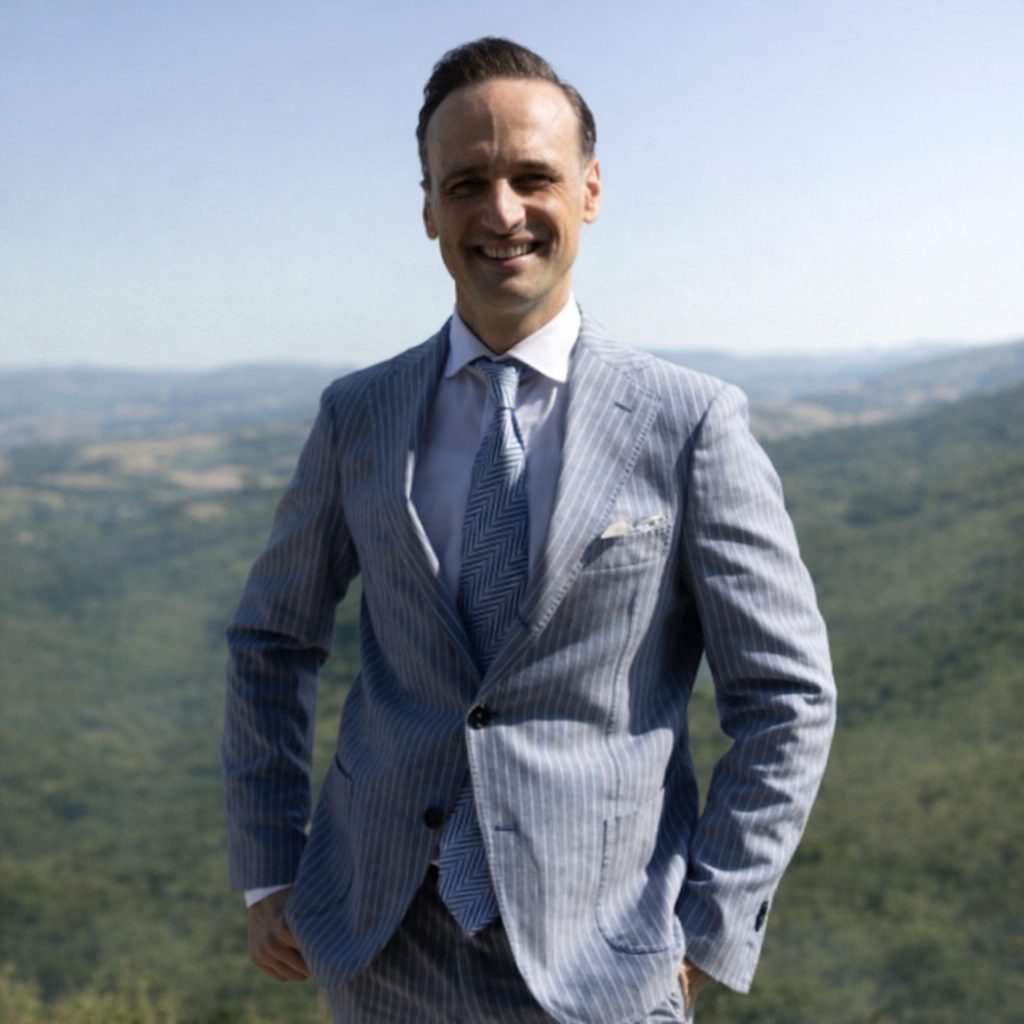
Dr. Giuseppe Maddalena
Agricultural scientist · Entomologist · Independent professional § 18 EStG · Baden-Württemberg
PhD in applied entomology with international research experience. Over 25 years between laboratory, field and practical work in pest control and agricultural ecosystem management. Trained as Lead Auditor under ISO 9001, 14001, 22000 and 45001 — a profile combining scientific rigour, operational experience and understanding of management systems.
MadLeaf grew out of the intersection of these two worlds: not an academic service detached from practice, not a purely commercial approach either, but a bridge between scientific analysis and everyday operational decisions.
Sample reports
This is what a MERF Report looks like.
Three anonymised examples for download — one per report type.
The reports include: risk profile with KPIs, identified hotspots, seasonal dynamics, evidence-based measures. Each report is individual — based on the specific data of your site.
Book
Choose the right analysis.
For municipalities, hotels, campsites, green spaces, residential complexes. KPIs, hotspots, seasonality, evidence-based measures.
Do you know the real risks on your site? Vectors, hotspots, seasonality — clear KPIs instead of guesswork. Report in 5 working days from processing start, by email.
Book now →For veterinarians, pet boarding facilities, families. KPIs for animals and humans, current scenario and seasonal worst case.
Does your pet live in a safe environment? Ticks, horseflies, flies — find out exactly what risks exist and what to do now.
Book now →For natural areas, ESG documentation, green space strategy. Ecological quality, habitat value, improvement potential.
Looking for an on-site service in BW, a technical assessment or tailored consulting? View all services →
Do you have questions?
Via WhatsApp or email. In a few messages we will figure out together which path makes sense for your case.